CAMPING
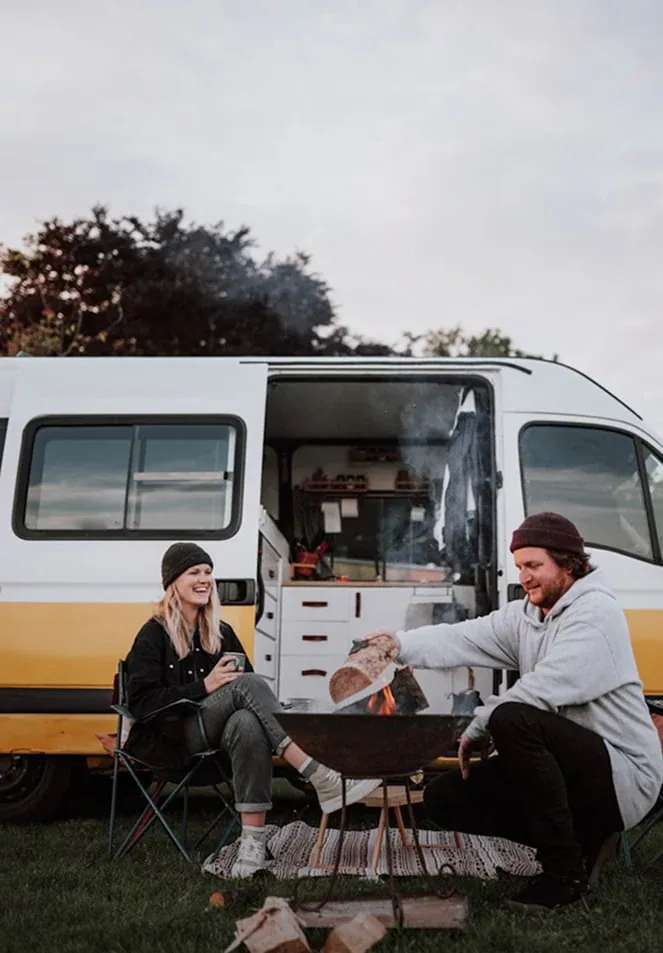
Built for camping
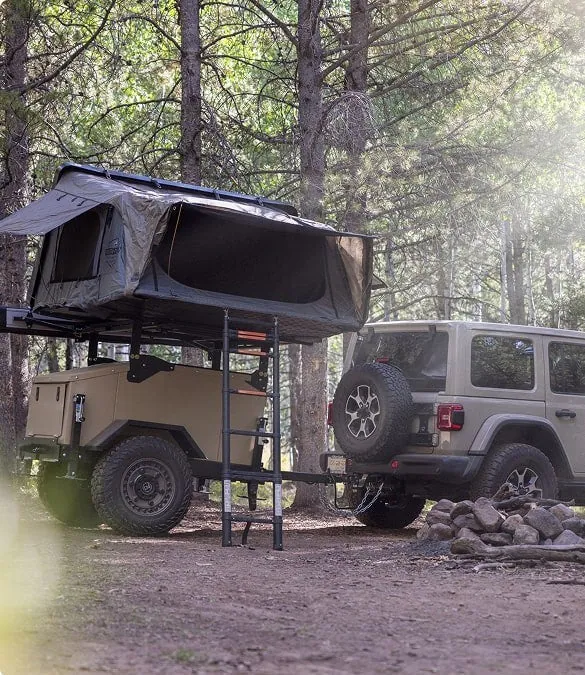
Whether you're setting up basecamp in the backcountry or car camping with the crew, the Basecamp V3 has everything you need — roof-top tent, integrated kitchen, portable power, and rugged storage. Set up camp in minutes and spend more time around the fire.
FEATURE HIGHLIGHTS
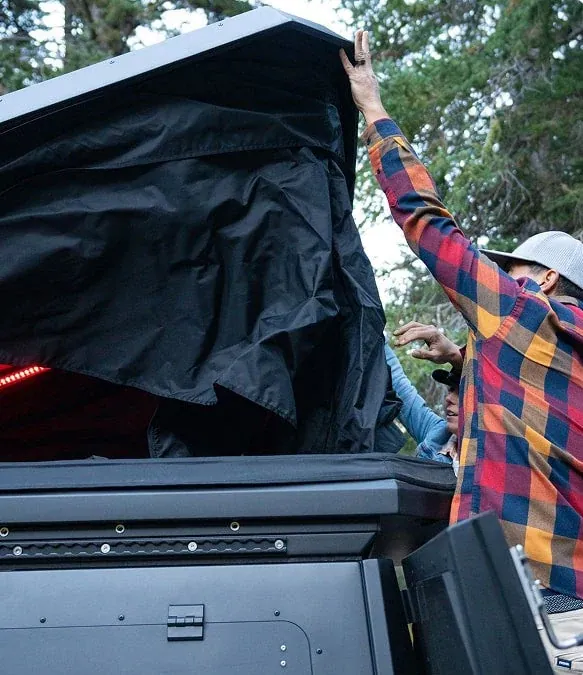
- XL rooftop tent + 270° awning
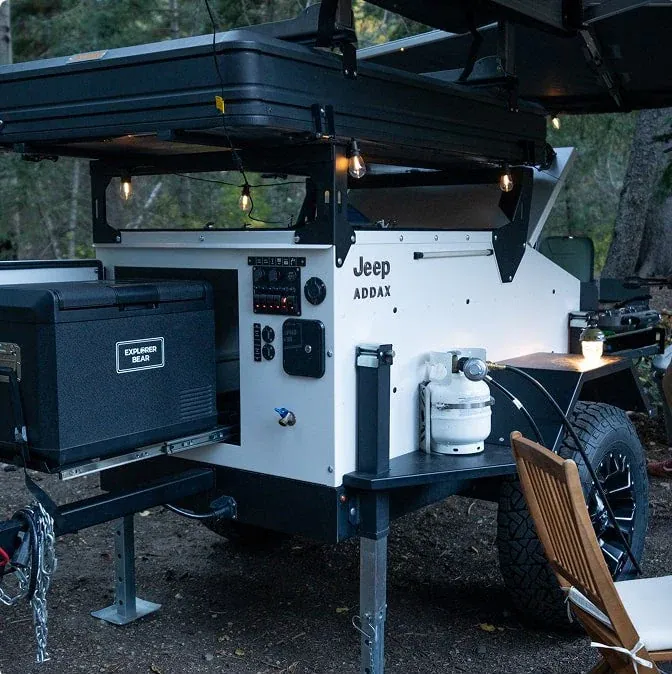
- 7-foot kitchen pull out
- 100Ah lithium power system
All Comfort Package
- Premium rooftop mattress
- Quick-deploy car-side shower
- Propane on-demand water heater
HITCH CLUB
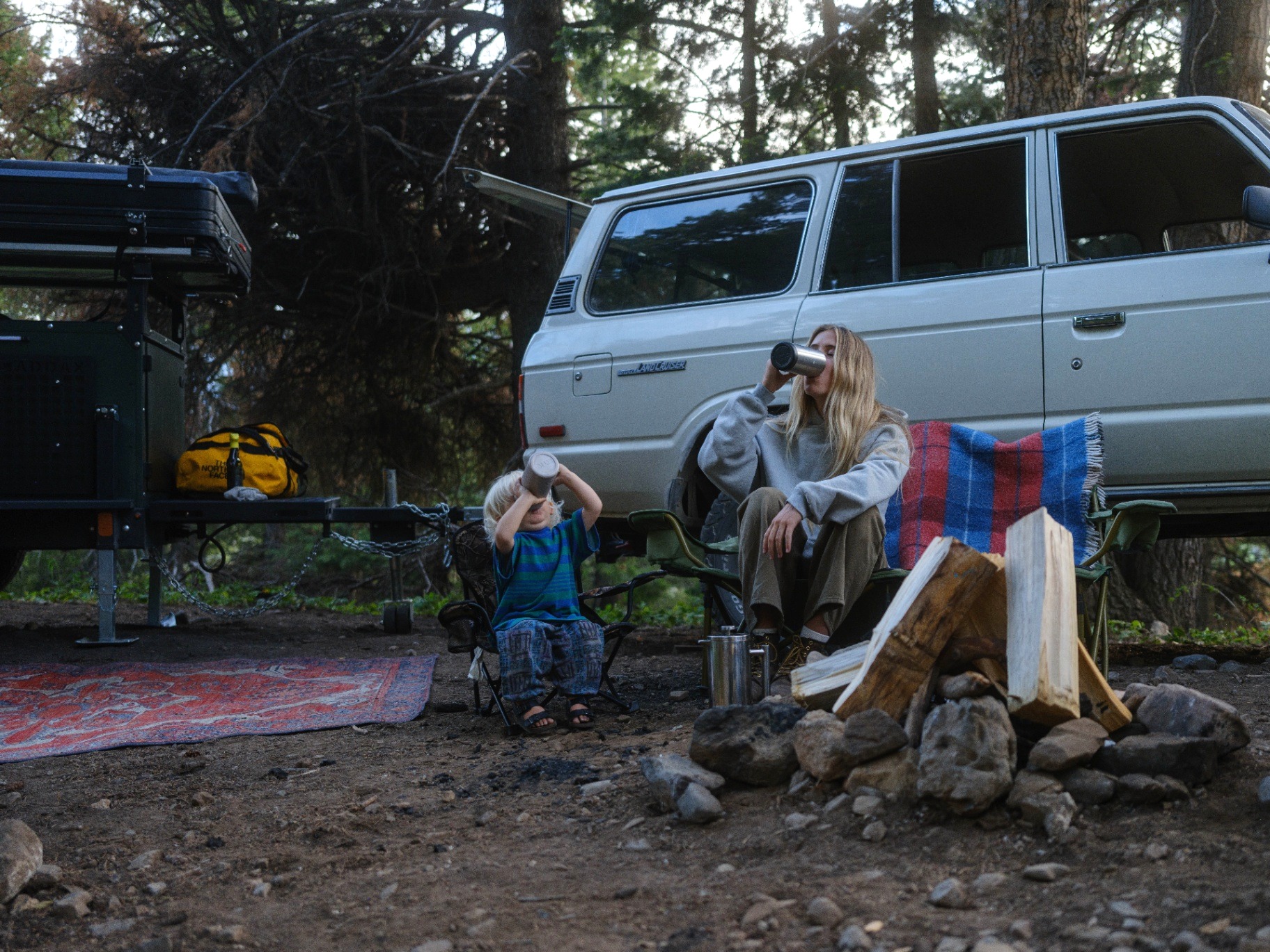
We rolled into camp like outlaws, dust clouds in our wake, trailers overloaded with debatable ideas. By sundown, we had a fire big enough to make Smokey the Bear sweat. Someone whipped out a wireless speaker. Minutes later we were doing chainsaw karaoke, revving solos to '80s hair metal. When the ranger showed up, we promised we'd turn it down, after just one more...

Flip 'em and rip 'em.
At midnight, hunger struck. We fired up the flattop. Nothing tastes better than flapjacks and dirty "5-second-rule bacon" while coyotes join in with backup vocals. Sam flipped his cake so high it landed on the roof of the trailer. We left it there as an offering to the sky gods. Around 2am we started telling ghost stories, but every story had to include a mullet and made-up beer commercial. By morning, nobody knew where their shoes were, but everyone knew this: you don't go off-road camping to follow rules. You come out here to write your own.
Find a DealerAll Season Package
- Expion360 portable solar bundle
- Rooftop tent annex room
- 270° awning wind & weather walls
Choosing an off-road camping trailer
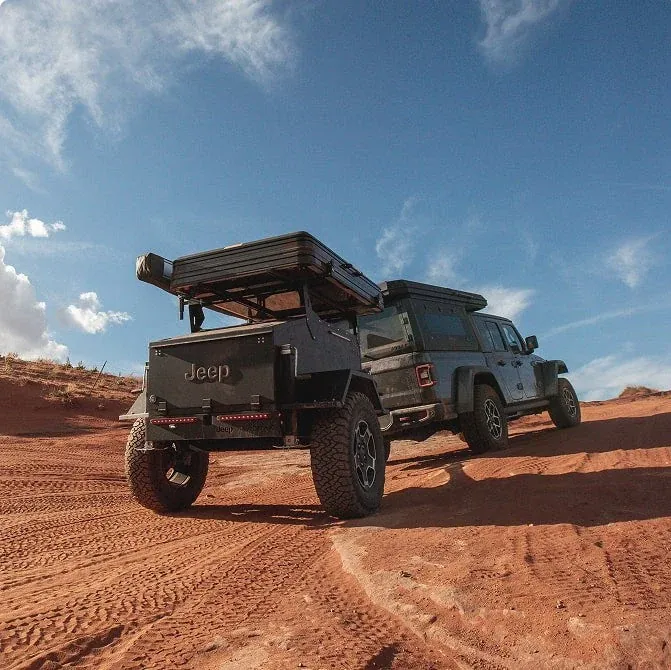
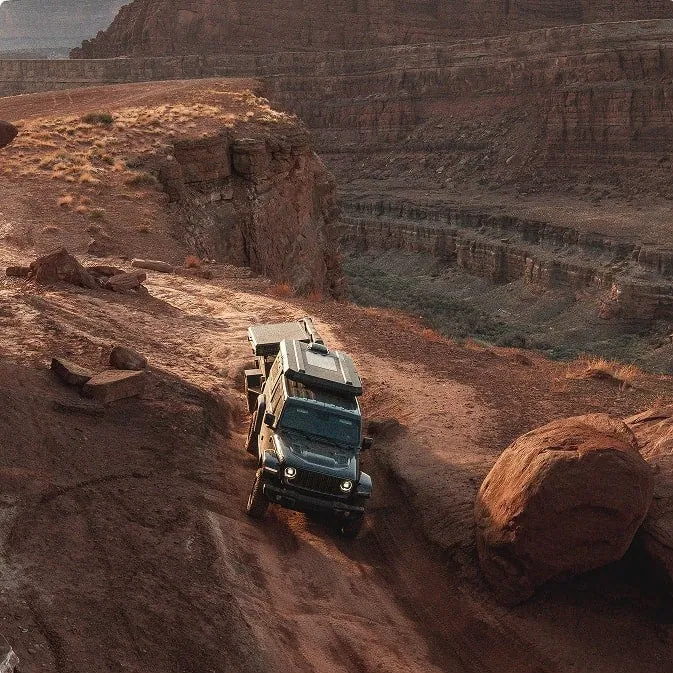
Most camping trailers are built for pavement and improved campgrounds. An off-road overland trailer is a different machine: it has to survive washboard, rock ledges and ruts while carrying everything you need to sleep, cook and stay powered without hookups. The ADDAX Basecamp V3 is built for that second job — 17 inches of ground clearance, an articulating hitch that lets the trailer twist independently of the tow vehicle, and a 3/16 in steel chassis under a 14 gauge steel body.
If you are shopping for your first hard-sided camping trailer, the decision usually comes down to four things: how far off pavement you actually plan to go, how many nights you want to run without shore power, how you cook, and what your tow vehicle can legally pull. This guide walks through each of those for the way most people camp — a Friday-to-Sunday run to a dispersed site, plus one or two longer trips a year.
What to look for in a camping trailer
Clearance and departure angle decide where you can sleep. A trailer that scrapes on the approach to a dispersed site sends you back to the campground. Seventeen inches under the axle plus 29 in all-terrain tires on 15 in rims means the Basecamp follows a stock mid-size 4x4 down most forest-service roads without a spotter.
Sleeping setup decides how long setup takes. A rooftop tent gets you off wet ground, off rocks and away from anything crawling, and it deploys in a couple of minutes rather than the twenty it takes to level and stake a ground tent in the dark. The Basecamp ships with an XL rooftop tent and a 270° awning already mounted, so the roof is not a project you finish later.
Power decides how many nights you get. A 100 Ah lithium battery, 220 W of solar input, a DC-to-DC charger off the tow vehicle and a 1500 W inverter mean the fridge, lights, pump and device charging run off the trailer instead of off your truck's starting battery. Shore-power pass-through covers the nights you do end up at a campground with a pedestal.
Kitchen decides whether you actually cook. A 7-foot pull-out galley and a 53 L sliding electric fridge put the whole cooking operation at waist height on the side of the trailer, which is the difference between a real dinner and another gas-station sandwich.
Payload decides whether you can bring the family. A 1,450 lb payload on a 3,500 lb axle leaves real margin for water, fuel, firewood, coolers, bikes and camp chairs after the trailer's own 1,800 lb dry weight.
Which Basecamp specs matter for camping
| Spec | Basecamp V3 | Why it matters camping |
|---|---|---|
| Rooftop tent | XL rooftop tent with 270° awning | Off the ground, deployed in minutes, shaded living room underneath |
| Fresh water | 22 gal with electric pump | Cooking, dishes and washing up for a long weekend without a refill |
| Battery | 100 Ah lithium, 220 W solar input | Fridge and lights overnight, recharged by sun the next day |
| Kitchen | 7 ft pull-out galley, 53 L fridge | Real meals at camp instead of a cooler full of meltwater |
| Payload | 1,450 lb | Water, fuel, firewood and gear for a family without overloading |
| Ground clearance | 17 in | Reaches dispersed sites a road-going camper cannot |
Camping checklist for a weekend off-grid
- Fill the 22-gallon fresh water tank and test the electric pump before you leave
- Top the 100 Ah battery to full and confirm the DC-to-DC charger is connected
- Two-burner stove, fuel and a lighter stored in the galley
- Cold food loaded in the 53 L fridge the night before, not the morning of
- Recovery basics: traction boards, a rated strap, gloves, a shovel
- Spare tire pressure checked — it matches the 5 x 5 lug pattern on the trailer
- Awning stakes and guy lines for wind
- Camp lighting and a headlamp per person
- Trash bags, a wash basin and a way to pack out grey water
- Paper map or offline GPS for the last few miles with no signal
Camping trailer FAQs
Can I tow the ADDAX Basecamp with a mid-size SUV?
How many nights can I camp without plugging in?
Do I need to level the trailer before opening the tent?
Is the rooftop tent all-season?
Where do I put water, fuel and firewood?
Can I camp in a developed campground with it?
Keep reading: full specifications on the Basecamp V3 product page, the tow guide, or configure your own in the 3D builder.
Featured Brands
Build your camping rig
Follow the Adventure
@addaxoverland