SNOW
Built for snow
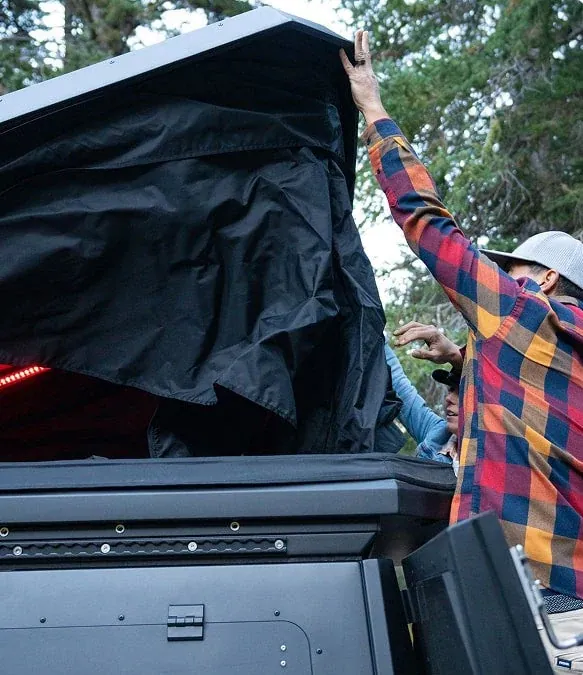
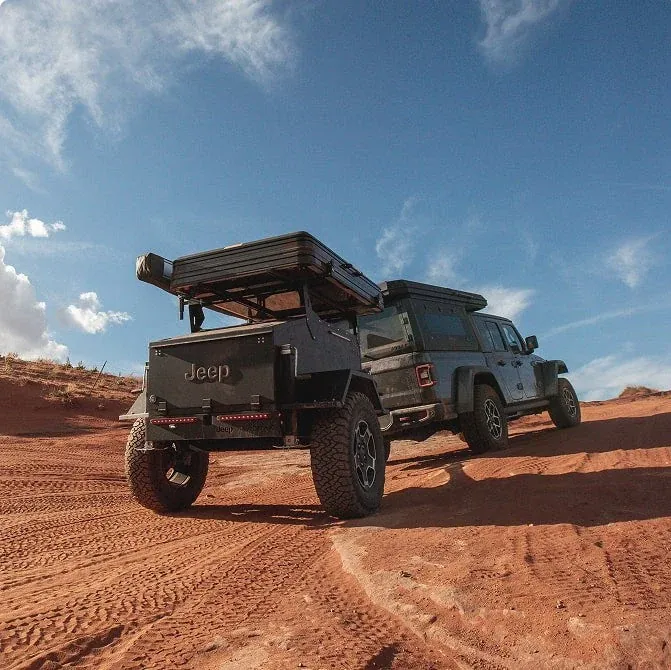
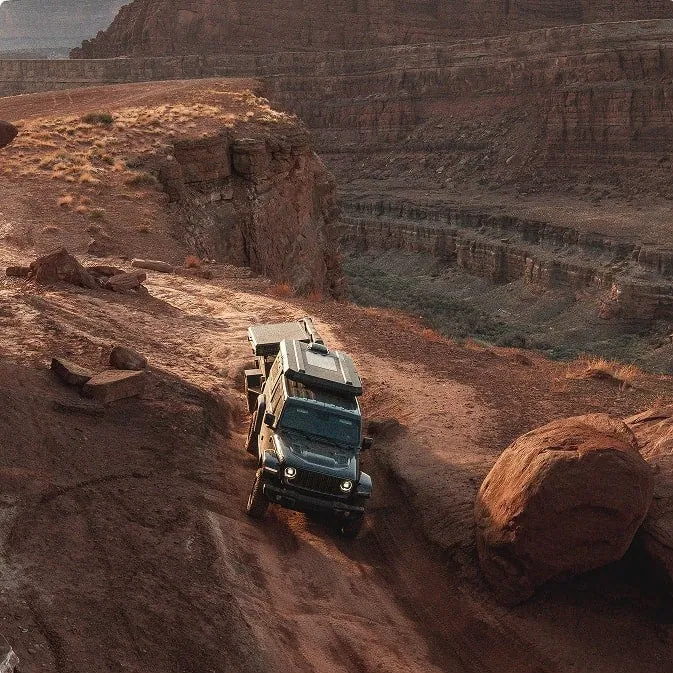
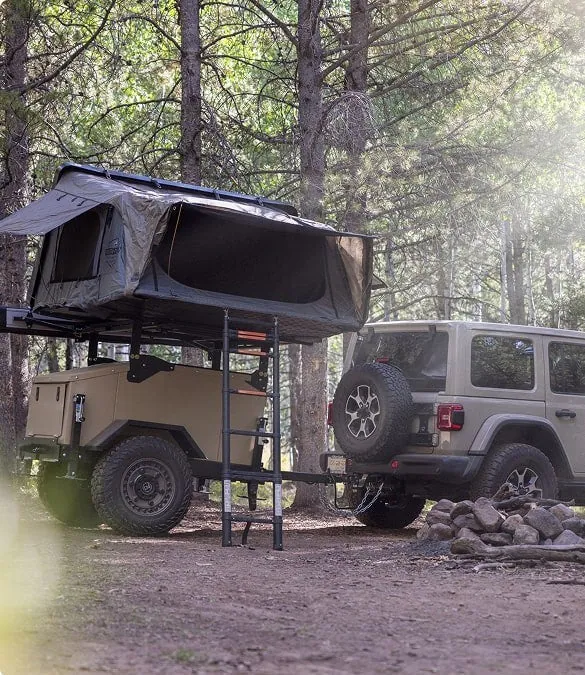
From ski trips to snowmobile adventures, the Basecamp V3 is engineered to handle the cold. All-terrain tires grip through snow, the battery system keeps everything powered in freezing temps, and you can warm up in your rooftop tent after a long day on the mountain.
FEATURE HIGHLIGHTS
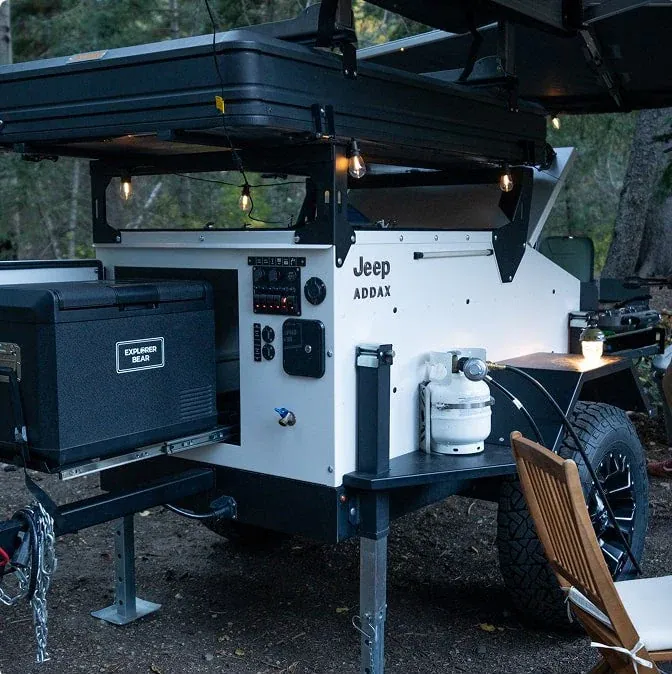
- XL rooftop tent + 270° awning
- 100Ah lithium power for sub-freezing temps
- 31" all-terrain tires for snow-packed roads
All Season Package
- Portable AC / Heater unit
- Insulated rooftop tent liner
- 270° awning wind & weather walls
FULL SEND SOCIETY
We didn't have a place to eat, so we dug one. Carved out a dining table behind the gear trailer. Snow banks became chairs, jackets became tablecloths, and caps became napkins. Some dude brought a propane launcher they swore was "totally safe." Next thing, brats were being blasted across the lot to my obnoxiously loud playlist of Yacht Rock from my truck speakers.
Yeet me a bun, bruh.
Suddenly it was less ski resort and more block party with strangers wandering over to ask for a taste. We handed out steaming hot cider, cold brews, and everyone toasted with mismatched mugs. The mountain was waiting, but for a moment the best view was right there: friends, food, and a brat-sized dent in the side of my truck.
Find a DealerAll Terrain Package
- Full-size matching spare tire
- Heavy-duty rear swing-out arm
- Two Roto-Pax with locking mounts
Winter camping and cold-weather overlanding
Winter is where cheap camping trailers fail. Batteries lose capacity, water lines freeze, condensation soaks a tent from the inside, and snow-packed roads punish a trailer with low clearance or a rigid hitch. Cold-weather overlanding needs insulation, heat, a battery chemistry that behaves in the cold, and a chassis that tracks in ruts.
The Basecamp V3 pairs 17 inches of ground clearance and 29 in all-terrain tires with a 100 Ah lithium system, and the All Season Package adds the specific parts winter demands: an insulated rooftop tent liner, a portable AC/heater unit and 270° awning wind and weather walls.
What to look for in a winter-capable trailer
Insulation at the sleeping space. Heat is wasted in an uninsulated tent. The All Season Package's insulated rooftop tent liner is the first upgrade for anyone camping below freezing.
A heat source you can run safely. The portable AC/heater unit in the All Season Package handles both ends of the year — shoulder-season heat and summer cooling.
Wind management. Wind, not temperature, is what makes winter camp miserable. The 270° awning with wind and weather walls turns the side of the trailer into a usable outdoor room in weather.
Battery capacity you can recover. Short winter days mean less solar. A 100 Ah lithium battery, DC-to-DC charging while you drive and shore-power pass-through give you three ways to get charge back in.
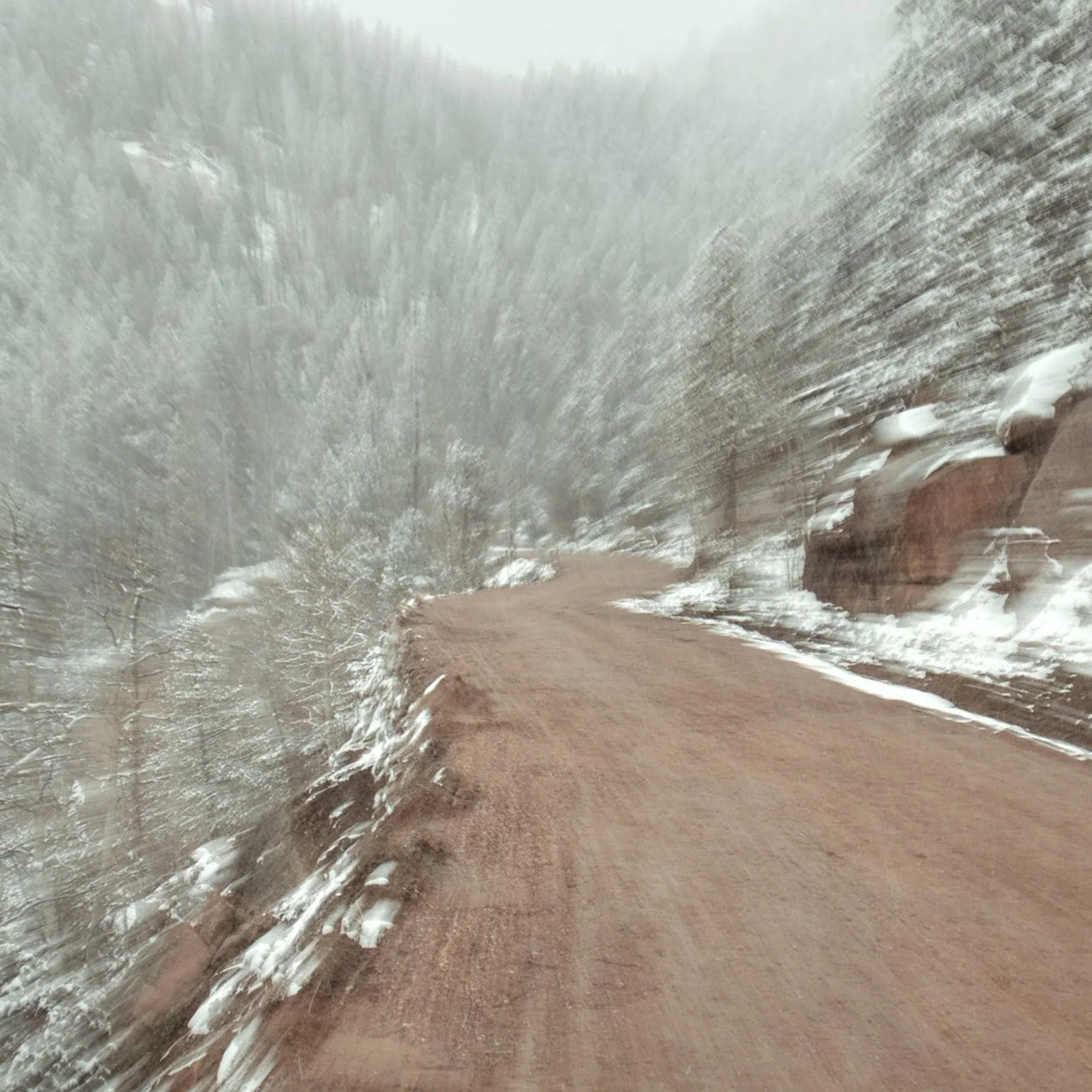
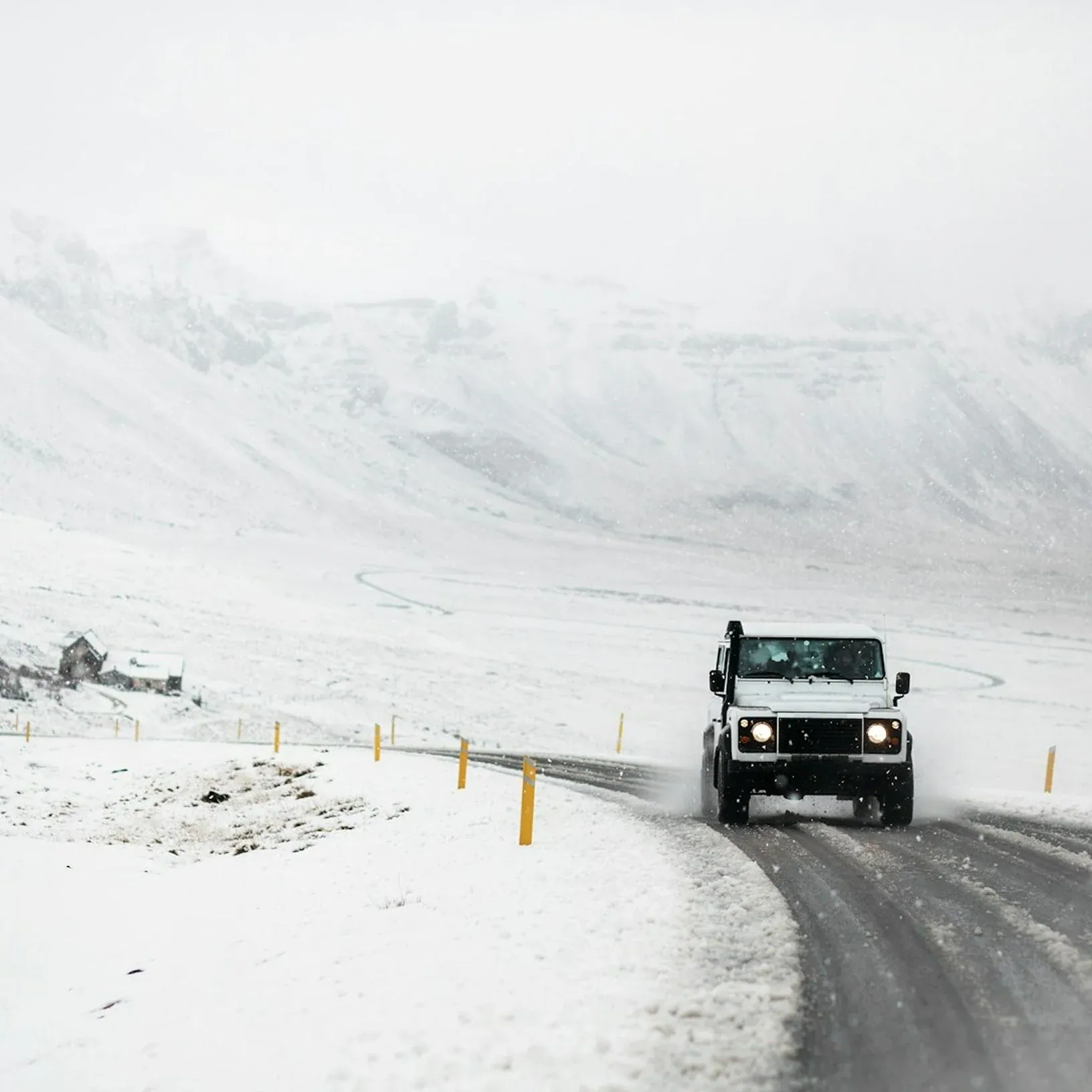
Traction and clearance. Snow-packed forest roads hide ruts and ice. Seventeen inches of clearance, torsion-axle suspension and an articulating off-road hitch keep the trailer following the tow vehicle rather than pushing it.
Freeze protection. Plan to drain the 22-gallon tank and lines for hard freezes and carry drinking water separately.
Which Basecamp specs matter in winter
| Spec | Basecamp V3 | Why it matters in snow |
|---|---|---|
| Insulated tent liner | All Season Package | Holds heat in the sleeping space and cuts condensation |
| Heater | Portable AC/heater unit (All Season) | Makes sub-freezing nights survivable and shoulder seasons pleasant |
| Awning walls | 270° awning wind and weather walls | Blocks wind so the outdoor kitchen still works |
| Battery | 100 Ah lithium with DC-to-DC charging | Recovers charge on short days when solar is limited |
| Tires and clearance | 29 in all-terrain, 17 in clearance | Clears snow-packed ruts and unplowed access roads |
| Suspension and hitch | Torsion axles, articulating off-road hitch | Keeps the trailer tracking on ice and uneven snow |
Winter camping checklist
- Insulated tent liner installed before the trip, not at the trailhead
- Heater tested and fuel or power budget planned for the coldest night
- Battery fully charged; expect reduced solar harvest on short days
- Water plan: drain the tank for hard freezes, carry jugs inside instead
- Traction devices for the tow vehicle and chains if the state requires them
- Shovel, traction boards, recovery strap and gloves
- Sleeping bags rated well below the forecast low, plus a closed-cell pad
- Awning walls and extra guy lines for wind loading
- Avalanche awareness and a check of the local forecast if you are near terrain
- Full fuel in the tow vehicle and in the RotoPax cans — idling burns more than you think
Snow trailer FAQs
How cold can you camp in the Basecamp?
Does the lithium battery work in the cold?
Will the water tank freeze?
Can I tow it on a snowy forest road?
How do I deal with condensation in the tent?
What should I add first for winter use?
Keep reading: full specifications on the Basecamp V3 product page, the tow guide, or configure your own in the 3D builder.
Featured Brands
Build your snow rig
Follow the Adventure
@addaxoverland